
Quick Answer
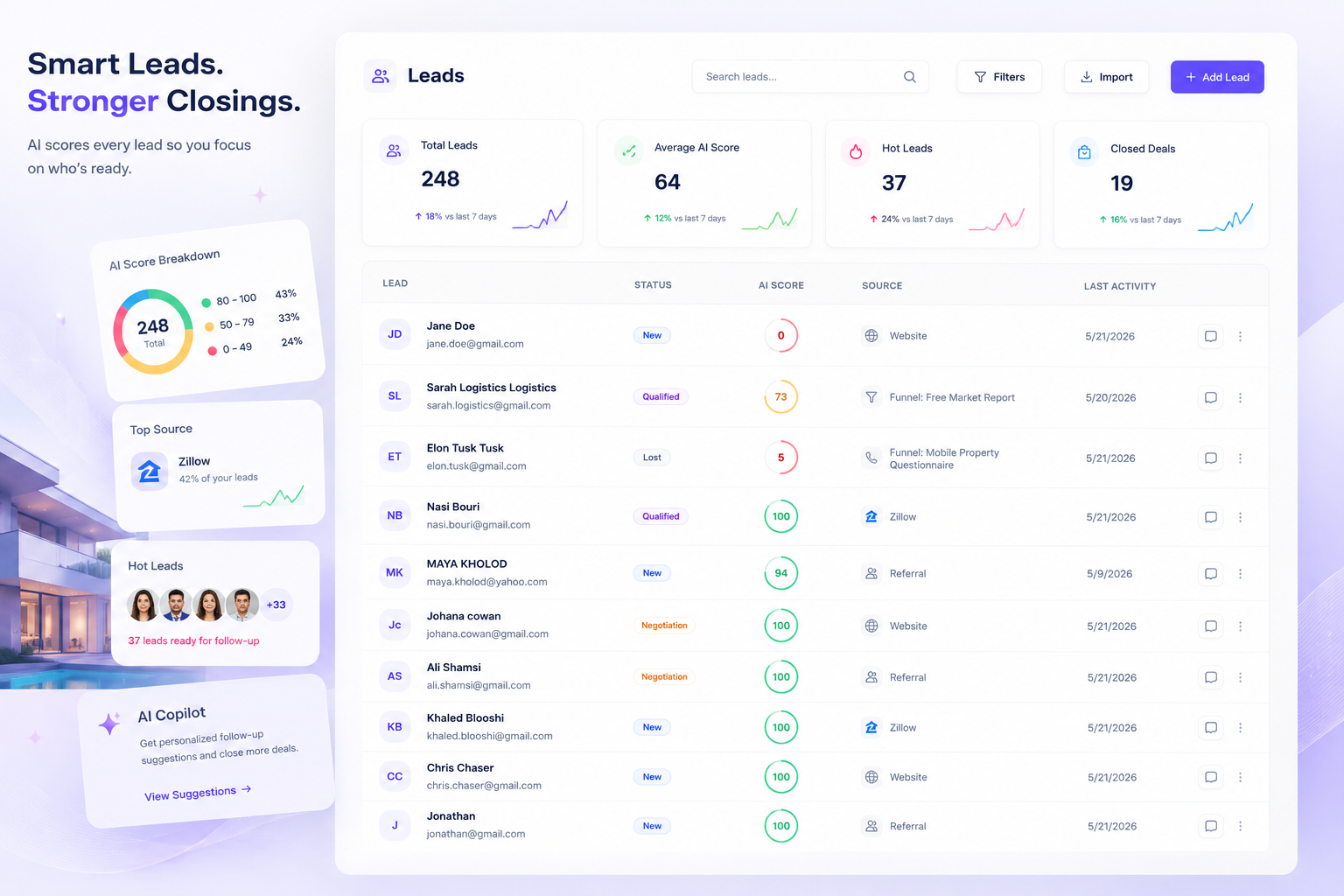
To score real estate leads, rank opportunities from 0 to 100 using budget, timeline, source quality, property fit, and engagement, then connect each score band to a clear follow-up action. XusCRM automates that model and surfaces who to call, email, or nurture first in the Action Center.
To score real estate leads, rank each opportunity from 0 to 100 using budget, timeline, source quality, property fit, and recent engagement, then connect each score band to a follow-up action. XusCRM applies this model automatically and surfaces the next best action in its Action Center, so agents can decide who to call, email, or nurture first.
What is real estate lead scoring?
Lead scoring is the process of ranking opportunities based on how likely they are to convert and how urgently they need attention. In real estate, the best scores blend timing, fit, source quality, and recent engagement instead of relying on only one signal.
What should a real estate lead score measure?
Timeline
A lead moving in 30 days is different from a lead researching six months ahead. Timing should carry real weight.
Fit
Does the lead match your market, price band, and service area? A high-intent lead outside your lane is still not your best opportunity.
Source quality
Referral, direct site inquiry, portal lead, and open house visitor do not all behave the same. Your model should reflect that.
Engagement
Replies, repeat listing views, showing requests, and form resubmissions often matter more than passive opens.
Should agents use points or simple categories?
Most solo agents and small teams perform better with a simple model than with a complex spreadsheet. Hot, Warm, and Cold is often enough if the definitions are tied to real behavior.
- Hot: near-term timing, strong fit, and clear engagement
- Warm: qualified but slower timing or lighter recent activity
- Cold: early-stage, weak fit, or no meaningful engagement lately
How should the score change follow-up?
- Hot leads: immediate response and tighter follow-up spacing
- Warm leads: scheduled check-ins and light nurture
- Cold leads: lower-touch tracking that preserves visibility without crowding the queue
Fast follow-up becomes easier when your highest-intent opportunities are clearly surfaced first.
How does XusCRM turn lead scores into daily action?
XusCRM combines a 0–100 lead score with contact history, funnel activity, timing, and deal-risk signals. The Action Center turns those signals into a ranked daily queue, while the CRM keeps lead context and follow-up history beside the recommendation.
This approach works for solo agents and teams: compare the best CRM options for real estate teams, or see how XusCRM fits agents moving from generic work management with the Monday.com alternative guide and agents replacing legacy software with the LionDesk migration guide.
What mistakes make lead scoring useless?
- Making the model too complicated to maintain consistently
- Scoring based on gut feeling instead of visible behavior
- Never updating the score after the lead responds or stalls
- Failing to tie score bands to real workflow actions
How often should the score change?
The score should move when the facts move. A reply, a showing request, a new property preference, or a long silence can all justify an update. Next-best-action systems work best when the score is dynamic instead of permanent.
Drip campaign timing and pipeline review both get better when score bands are trusted by the team.
Last updated: July 2026.
Ready to turn follow-up advice into daily action?
XusCRM gives agents lead scoring, Action Center prioritization, workflows, and funnel capture in one focused real estate workspace.
Start free